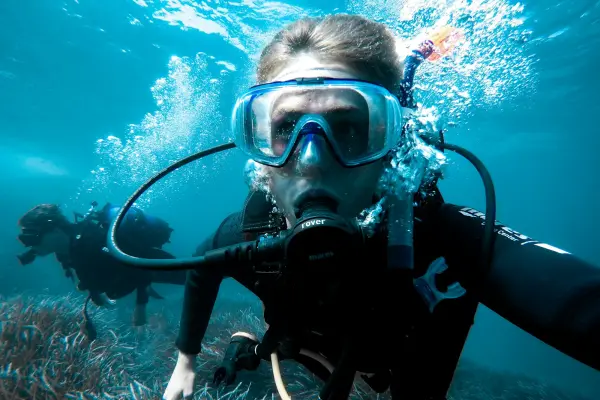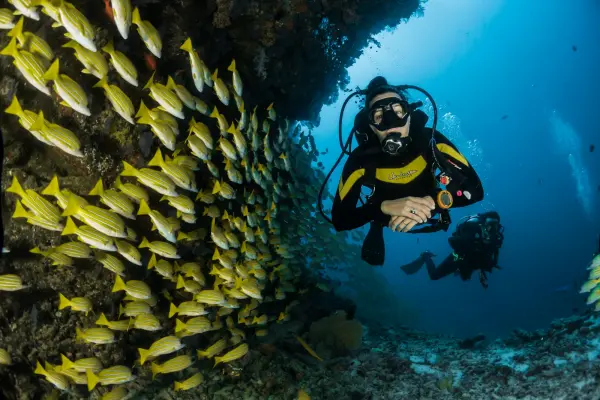


The short answer: do not touch, stand on, feed or take anything from the reef, keep your fins and gear well clear of it, and cover up with a rash vest before you reach for sunscreen. Those few habits cover most of what protects Red Sea coral. The rest of this guide explains why they matter, what the rules in protected areas usually look like, and how to choose sun protection and tour operators with the reef in mind.
Why does reef etiquette matter in the Red Sea?
Red Sea reefs are a large part of why people travel to Egypt, and they are also slow-growing living systems. Reef-building (stony) corals add only a few millimetres to a few centimetres of skeleton per year depending on the species, so damage from one careless moment can take years to repair, if it repairs at all. Warming seas, coastal development and heavy visitor numbers add pressure, which is why small actions by each visitor are worth taking seriously. Red Sea corals are often described as relatively heat tolerant compared with many other reef regions, but that is no reason to add avoidable stress.
The good news is that reef-friendly behaviour is simple and costs nothing. If you are new to the water here, our Red Sea diving guide and snorkelling guide for non-divers cover the wider basics.
Is it OK to touch coral?
No. Coral is a colony of tiny animals (polyps) covered by a thin living tissue layer. Touching it can scrape that tissue, open the door to infection and snap fragile branches. It is also better for you: some corals and reef animals can sting, cut or irritate skin. Fire coral (genus Millepora) looks like a smooth, yellowish-brown crust or blade-like plate, is common on Red Sea reefs and causes a burning rash on contact. Reef cuts from hard coral can be slow to heal in warm water, so cover and clean them properly.
Standing on coral is never fine. Dead-looking rubble and flat shallow reef tops are still part of the reef. If the water is too shallow to swim over, walk out only on sand or at the designated entry point, or choose a different spot.
Do
- Float horizontally and keep fins high in shallow water.
- Keep a comfortable distance from the reef surface, roughly an arm's length or more.
- Use a bare sandy patch if you must rest, and only if your guide agrees.
- Clip or tuck away dangling gauges, cameras and octopus regulators.
Don't
- Stand, kneel or lean on coral, even dead-looking coral.
- Hold the reef for balance or to steady a photograph.
- Kick down towards the reef or sweep your fins across the bottom.
- Wear gloves as a licence to grab things. In many areas they are discouraged.
Why does buoyancy control protect the reef?
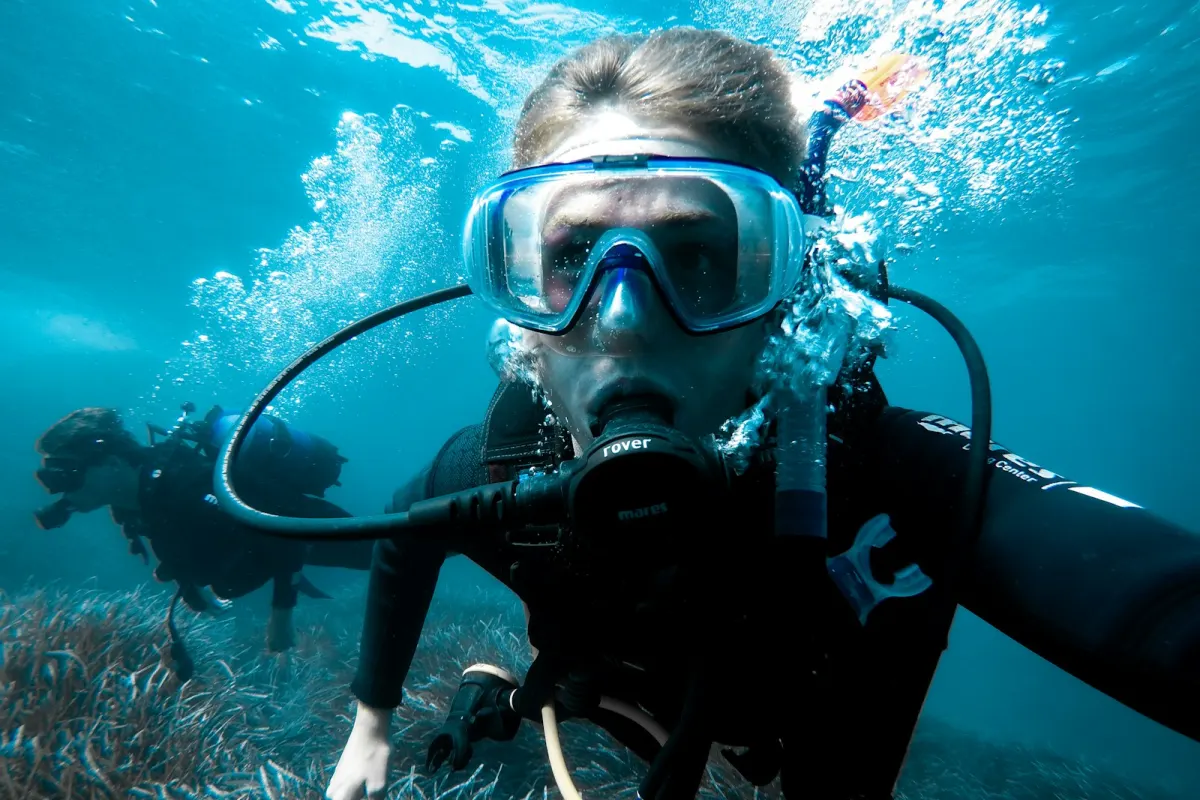
For divers, good buoyancy is the single most useful reef-protecting skill. A diver who hovers neatly can move around the reef without any contact, while one who bobs up and down tends to kick, grab and drag equipment across it. If buoyancy is not yet your strength, a peak performance buoyancy specialty or simply a few relaxed practice dives in open sand areas is a worthwhile investment, and it also uses less air. Beginners are best placed on sites with sandy areas and gentle conditions; for ideas by experience level, see dive sites by level.
Snorkellers can help in the same way by staying flat on the surface, avoiding sudden kicks in shallow water and using a flotation vest or noodle if they need to rest without standing. Weaker swimmers should tell the guide so they can stay near the boat and away from fragile areas.
- Before entering, adjust your mask and fins on the boat or on sand, not on the reef.
- Enter at the designated spot, ideally from a pontoon, ladder or sandy patch.
- Take a moment at the surface to settle your breathing and position.
- Swim with a slow, gentle kick from the hips, keeping fins level with or above your body.
- If you get close to the reef, stop, check your position and back away calmly.
How should you behave around marine animals?
Marine life here is a draw in itself, and the same rule applies as with coral: observe, do not interfere. For more on what you are likely to meet, see marine life in Hurghada.
- Do not feed fish. Feeding changes natural behaviour, can make fish pushy or aggressive and upsets the balance of the reef.
- Do not chase, ride or grab animals. That includes turtles, rays and sharks. Let them approach you and give them room to leave.
- Dolphins: responsible operators keep their distance, do not crowd the animals and avoid chasing or touching. Be cautious about trips that promise guaranteed encounters, and stay out of the water if the dolphins appear to be avoiding the boat.
- Do not lift animals for photographs. Starfish, octopus, cucumbers and shells are often stressed or killed by being taken out of the water.
- Do not harass hidden animals. Some well-camouflaged species, including stonefish, are better left alone entirely. See our stonefish guide for why you should never put a hand down without looking.
Can you take coral, shells or sand home from Egypt?
You should not. Collecting coral, shells and other marine life is prohibited in protected areas and discouraged elsewhere, and rules on exporting marine items and some animal-derived products can be strict, with possible penalties at the airport. Buying such souvenirs from shops also encourages collecting, so it is best to skip them. Rules can change, so check the current position with official sources if you are unsure. Photographs and memories are the safest things to bring home.
Take your rubbish with you, and if you can safely pick up litter in the water or on the beach, do so. Fishing line, plastic bags and bottles are particularly harmful to marine life, and cigarette ends are surprisingly common on beaches.

Which sunscreen is better for reefs?
There is no single scientifically settled "reef-safe" label, so the most honest answer is: reduce how much sunscreen enters the water, and choose the options thought to be gentler. Laboratory studies have raised concerns about certain chemical UV filters such as oxybenzone and octinoxate. Some places, including Hawaii and Palau, have restricted sunscreens containing them. How much those findings reflect real-world reef conditions is still debated, and tourist numbers, heat and pollution also matter.
| Option | Reef impact | Notes |
|---|---|---|
| Rash vest or long-sleeved swim top | Lowest | Often the best choice, because less sunscreen is needed on your body. |
| Leggings or shorty wetsuit | Lowest | Good for long snorkelling sessions, and useful against jellyfish or fire coral too. |
| Mineral sunscreen (zinc oxide or titanium dioxide, non-nano) | Considered gentler | Check labels, since not every mineral product is free of other concerning ingredients. |
| Chemical sunscreen with oxybenzone or octinoxate | Concerns raised | Avoid where possible, especially before swimming in sensitive areas. |
| No sun protection | Not an option | Sunburn and heat illness are real risks in Egypt, so do not skip protection. |
- Apply sunscreen 20 to 30 minutes before entering the water so it has time to absorb.
- Wear a hat and sunglasses, and seek shade in the middle of the day.
- Reapply after towel drying, and use water resistant products where possible.
- Terms like "reef safe" and "reef friendly" are not strictly regulated, so ingredients matter more than the front label.
Skin and health note: this is general information, not medical advice. If you have sensitive skin, a skin condition or are unsure about a product, ask a pharmacist or doctor. Sun protection should not be sacrificed for reef concerns.
What are the rules in Egyptian marine protected areas?
Egypt has several protected marine areas on the Red Sea, and some of the best-known reefs sit inside them. Ras Mohammed National Park, near Sharm el Sheikh at the southern tip of the Sinai peninsula, is the best-known example. The islands and reefs off Hurghada, including the Giftun area, are also covered by protection rules. Boundaries, fees and regulations can change, so treat the following as typical patterns rather than a current rulebook.
- No collecting or removing coral, shells or other marine life.
- No anchoring on the reef, with boats using mooring buoys instead.
- No fishing in restricted zones, and no spearfishing.
- Entry into the water only at designated places.
- Entry or marine park fees, usually collected through your tour operator or dive centre. Amounts change, so ask what applies to your trip.
Rangers can enforce these rules, and fines are possible. Follow signs and the instructions of your guide, and ask if you are not sure what is allowed.
How do you choose a reef-friendly boat or dive operator?
Where you book makes a real difference. The following signs generally point to a more responsible operator, and our questions to ask a dive centre list can help when you compare options.
- The boat uses moorings rather than dropping an anchor on coral.
- Guides give a proper briefing that includes reef care, entry points and distance from marine life.
- Groups are reasonably small, so guides can supervise, and the site does not feel overcrowded.
- The operator does not promise guaranteed animal encounters or encourage touching and feeding.
- Rubbish and waste are handled properly onboard.
What is a quick reef-friendly checklist?
- Bring a rash vest or long-sleeved swim top.
- Pick a mineral sunscreen and apply it early, if you use sunscreen on exposed skin.
- Know your entry and exit points before getting in.
- Keep gear tucked in, and fins well above the reef.
- Never stand on, touch or collect coral, shells or marine animals.
- Do not feed fish, and keep your distance from turtles, rays, sharks and dolphins.
- Take all of your rubbish away, and pick up any you safely can.
- Check what fees and rules apply before heading into a marine protected area.
Frequently asked questions
Is it really that bad to touch coral?
Yes. Even a light touch can harm the tissue, and contact from many visitors adds up. Staying clear is a simple, effective way to help.
Are all mineral sunscreens fine?
They are generally considered gentler options but are not risk-free, and rash vests remain the best choice. Check ingredient lists rather than relying on marketing claims.
Can I snorkel from the beach safely?
Often yes. Follow local guidance, watch for boat traffic, go with a buddy and be mindful of currents. If you are unsure, ask your hotel or a local dive centre.
Small choices add up, and every visitor who treats the reef well helps it stay beautiful. If you would like to talk about planning a trip, get in touch.
Frequently asked questions
Is it okay to touch coral when snorkelling in Egypt?
No. Coral is a living colony, and even a light touch can damage its tissue and break structures that took years to grow. Some corals, such as fire coral, can also sting or cut you. Do not stand on coral, even if it looks dead, and avoid holding the reef for balance. Keep your hands, fins and cameras clear of it.
What sunscreen should I use when swimming on the Red Sea reefs?
A rash vest or long-sleeved swim top is usually the best first step, since it reduces how much sunscreen enters the water. For exposed skin, many people choose a non-nano mineral sunscreen with zinc oxide or titanium dioxide. Read the ingredient list, because terms like reef safe are not strictly regulated, and apply it 20 to 30 minutes before swimming.
Is chemical sunscreen banned in Egypt?
We are not aware of a general ban on chemical sunscreens for tourists in Egypt, but rules and park regulations can change, so check with your operator or official sources. Some destinations elsewhere, such as Hawaii and Palau, have restricted certain filters. Whatever you use, protect your skin, since sunburn is a real risk in Egypt's strong sun.
Can I take shells or coral home from Egypt?
You should not. Collecting coral, shells and other marine life is not allowed in protected areas and is discouraged elsewhere, and rules on exporting marine items can be strict, with possible penalties at the airport. Buying such souvenirs in shops also encourages collection. Check current rules with official sources if unsure, and take photographs instead.
Do I have to pay to visit Ras Mohammed or other marine parks?
Protected areas often charge entry or marine park fees, which are typically collected through your tour operator or dive centre. Amounts and rules change, so ask what applies to your trip before you book. Typical rules include no collecting, no anchoring on the reef, no fishing in restricted zones and entering the water only at designated places.
Is it allowed to feed fish or swim with dolphins in Egypt?
Feeding fish is bad practice because it disrupts natural behaviour and can create pushy or aggressive fish. For dolphins, responsible operators keep their distance, do not chase or touch the animals and do not crowd them. Be cautious about trips that promise guaranteed encounters, and stay out of the water if the dolphins appear to be avoiding boats.
How can I choose a reef-friendly boat or dive operator?
Look for boats that use moorings rather than dropping anchor on coral, and operators who give a proper briefing covering reef care. Smaller groups are easier for guides to supervise, so avoid places that feel overcrowded. Be wary of trips that promise guaranteed animal encounters or allow touching and feeding, and ask questions before you book.
What should I do if I scrape myself on coral?
Get out of the water, rinse the area with clean water, and gently clean it, since coral cuts can be slow to heal in warm conditions. Cover it afterwards. This is general information, not medical advice. If the wound looks infected, becomes red, swollen or painful, or you feel unwell, seek local medical advice promptly.
Ready to dive the Red Sea yourself?
Book PADI-certified dive trips, courses and snorkelling excursions in Hurghada and Marsa Alam directly with our sister brand, Egypt X Diving.
Explore trips on egyptxdiving.com →