

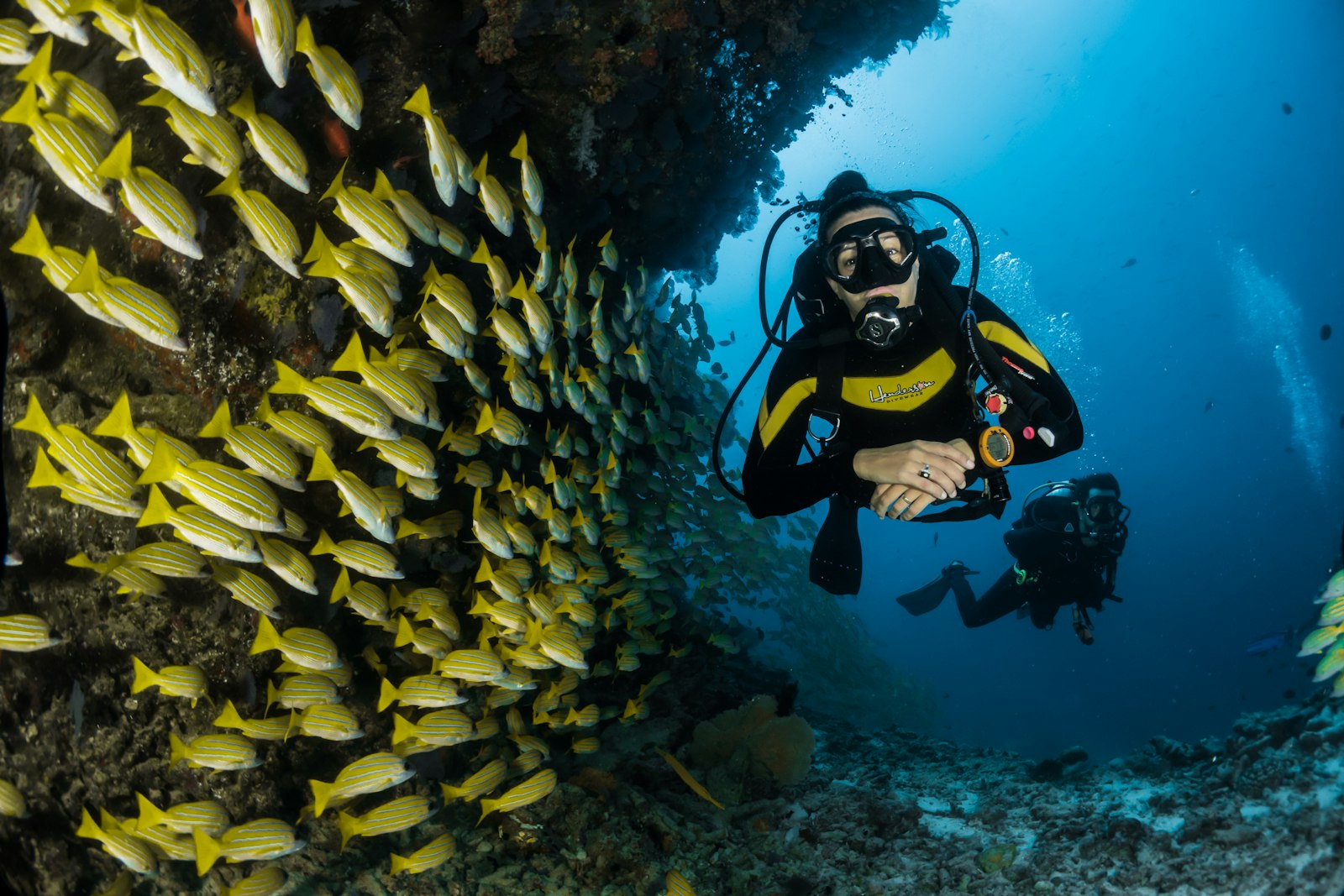
Ask any well-travelled diver for their top five destinations and Egypt Red Sea coast almost always makes the list. Warm water nearly year-round, visibility that regularly exceeds 20 metres, and an extraordinary density of coral and marine life packed into a relatively narrow, sheltered sea make it one of the most accessible world-class diving destinations anywhere.
Why the Red Sea is different
The Red Sea is a young, narrow, and unusually salty body of water, which produces conditions divers rarely find together anywhere else: strong coral growth, excellent visibility, and comparatively calm, protected diving even a short boat ride from shore. Because it is bordered by desert rather than major rivers, there is almost no silt or freshwater runoff clouding the water — one of the main reasons visibility is so consistently good.
Where to base yourself
Hurghada
The most accessible hub, with a large number of dive centres, easy day-boat access to reefs, and options ranging from gentle Discover Scuba Diving sessions for complete beginners to advanced wreck dives. It is also the most affordable base, with a wide range of PADI course pricing.
Marsa Alam
Further south and quieter, Marsa Alam is known for close encounters with dugongs, reef sharks, and dolphins, along with pristine house reefs you can access directly from shore in some resorts. It suits divers who have done the highlights elsewhere and want a slower, wilder pace.
Sharm El Sheikh
Home to the Ras Mohammed National Park and the famous Thistlegorm wreck, Sharm sits at the tip of the Sinai Peninsula and offers some of the most dramatic wall diving in the region.
What you will actually see
Expect hard and soft coral gardens in excellent condition compared to many other reef systems worldwide, reef sharks, moray eels, turtles, and enormous schools of anthias lighting up the reef in orange. Dugongs (sea cows) are a highlight around Marsa Alam, and dolphin encounters are common on day trips to sites like Sha'ab Samadai.
Wreck diving
The Red Sea is also one of the best wreck-diving regions in the world. The SS Thistlegorm — a WWII British cargo ship sunk in 1941, its holds still full of motorcycles, trucks, and rifles — is considered one of the top wreck dives globally and is within reach from both Sharm El Sheikh and, for a longer day trip, Hurghada.
Never dived before?
You do not need any certification to try diving in Egypt. Every reputable dive centre runs a Discover Scuba Diving experience: a short briefing followed by a shallow, instructor-supervised dive, usually to a maximum of 8–12 metres. It is the easiest way in the world to find out whether diving is for you, no course required.
A note on safety
Always dive with a PADI (or equivalent) affiliated centre, and be honest on the medical questionnaire every dive centre asks you to complete before your first dive — conditions like asthma, recent surgery, or certain heart conditions can affect whether diving is safe for you, and a good operator will ask about this every time, not just once. If you have a pre-existing medical condition and want to check your travel or dive insurance actually covers you before you book, it is worth a quick conversation with your insurer, or with a travel health resource, before you fly rather than after you land.
Whether you are chasing a wreck a century old, your first breath underwater, or a slow drift along a wall of soft coral, the Red Sea earns its reputation — and it is one of the easiest world-class dive destinations to reach.
Ready to dive the Red Sea yourself?
Book PADI-certified dive trips, courses and snorkelling excursions in Hurghada and Marsa Alam directly with our sister brand, Egypt X Diving.
Explore trips on egyptxdiving.com →