

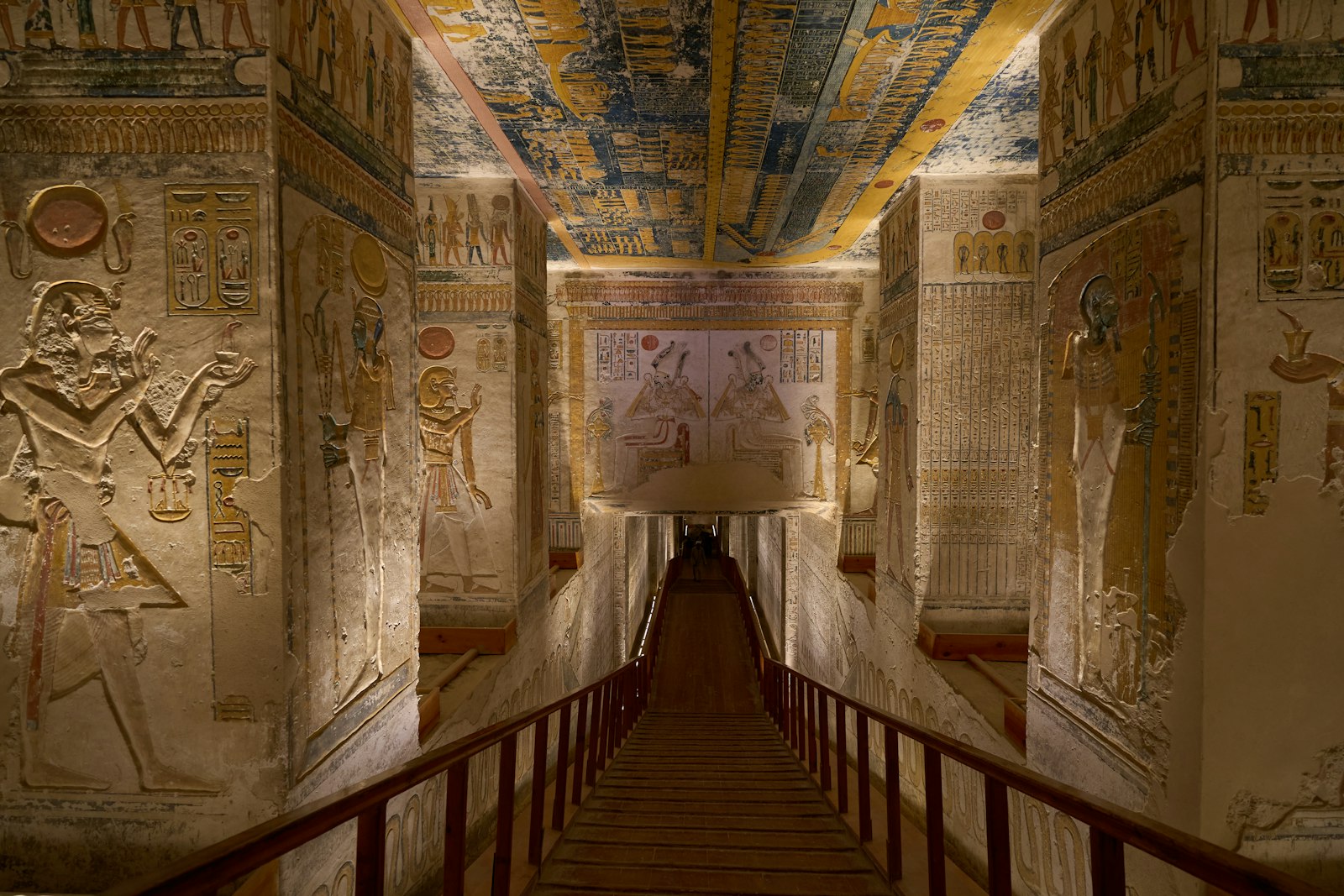
For roughly 500 years during Egypt's New Kingdom, this dry valley on the west bank of the Nile at Luxor was chosen as the burial ground for pharaohs, in an apparent attempt to keep their tombs hidden from robbers — a plan that worked for some tombs far better than others. Today it holds more than 60 known tombs, and walking into a 3,000-year-old burial chamber with its painted ceiling still intact is one of the most striking experiences Egypt has to offer.
Tickets and how the system works
A general admission ticket covers entry to the valley and a set number of standard tombs (the exact number and which tombs rotate periodically to manage wear on the paintings). Tutankhamun's tomb and a handful of others — most notably Seti I's, one of the largest and most elaborately decorated in the valley — require a separate, additional ticket. Tickets are bought at the main visitor centre before you enter, not at individual tombs, so decide before you go in which extra tombs you want to see.
Which tombs to prioritize
Tutankhamun's tomb is smaller and less elaborately painted than many people expect — its fame comes from the treasures found inside, most of which are now in the Grand Egyptian Museum, not from the tomb's decoration. If you only have time or budget for one paid extra, Seti I's tomb is generally considered the most impressive for its scale and the condition of its wall paintings. Among the tombs included in general admission, Ramesses III and Ramesses IV are consistently well-preserved and popular choices.
Best time to go
Arrive as close to opening (usually 6am) as you can manage. The valley has essentially no shade, temperatures climb quickly once the sun is up, and the earliest tour groups get both the coolest conditions and the emptiest tombs. By mid-morning in peak season, both the heat and the crowds inside the tombs increase noticeably.
What it's actually like inside
Photography without flash is generally permitted in most tombs (flash damages the pigments and is banned everywhere), though rules do shift periodically, so it's worth checking at the ticket office on the day. Tombs are accessed via a sloped or stepped corridor leading down to the burial chamber — expect narrow passages, some heat, and a small amount of walking on uneven surfaces rather than flat, open rooms.
Combining it with the rest of the West Bank
The Valley of the Kings is usually visited alongside other West Bank sites in the same morning: the Mortuary Temple of Hatshepsut, a short drive away, and the Colossi of Memnon, which sit right along the main road and cost nothing extra to see from outside. Most visitors treat the West Bank as a half-day trip separate from the East Bank temples (Karnak and Luxor Temple).
Practical tips
- Bring more water than feels necessary — there's little shade and the walk between tombs adds up.
- Wear comfortable shoes; the terrain between tombs is uneven desert ground, not a paved path throughout.
- Hire a licensed Egyptologist guide if you want context — tomb walls have no posted information, so the paintings mean far more with someone explaining them.
- A golf-cart shuttle runs from the visitor centre to the tombs themselves for a small fee — useful in the heat, easy to skip if you'd rather walk.
Few places compress this much of ancient Egypt's belief in the afterlife into such a small area — a single morning here, done at the right time of day, is one of the most reliably memorable stops on a Luxor itinerary.