

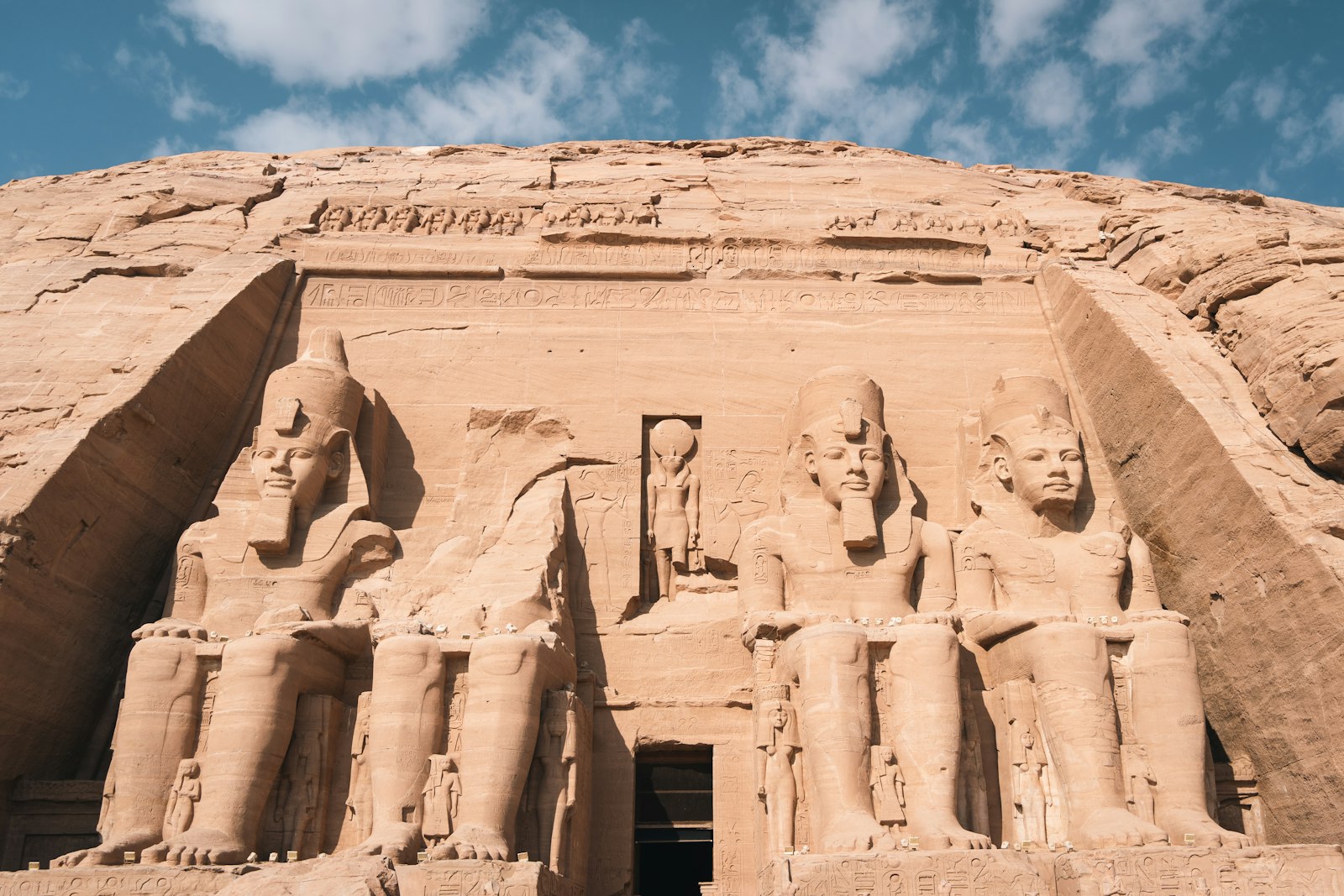
Aswan sits where the Nile narrows and the landscape turns more African than Mediterranean — granite outcrops, Nubian villages painted in bright colours, and a noticeably slower pace than Luxor or Cairo. It's also the base for visiting Abu Simbel, whose temples were physically cut apart and reassembled on higher ground in the 1960s to save them from the rising waters of Lake Nasser.
Philae Temple
Dedicated to the goddess Isis, Philae Temple was itself relocated — moved piece by piece to Agilkia Island after the original site was flooded by the Aswan Dam. Reached by a short boat ride, it's one of the best-preserved temple complexes in Egypt, and considerably less crowded than the major Luxor temples. An evening sound-and-light show runs on-site for visitors who want to see it after dark.
The High Dam
Completed in 1970, the Aswan High Dam controls the Nile's flooding and created Lake Nasser, one of the largest artificial lakes in the world. There isn't a great deal to actively "do" at the dam itself, but the viewpoint gives a sense of the scale of the engineering project that reshaped the entire course of modern Egyptian agriculture and, indirectly, made the Abu Simbel relocation necessary in the first place.
Nubian villages and Elephantine Island
A boat trip to a Nubian village — either around Elephantine Island or further along the Nile — is one of the most distinctive things to do from Aswan: brightly painted houses, a different culture and cuisine from the rest of Egypt, and in some villages the chance to see (and occasionally hold, at your own comfort level) domesticated Nile crocodiles kept by local families, a long-standing Nubian tradition.
Abu Simbel: planning the trip
Abu Simbel sits about 280km south of Aswan, close to the Sudanese border, and is usually visited as a long day trip — either by road convoy in the early morning or by a short domestic flight from Aswan for those short on time. The two temples, one for Ramesses II and a smaller one for his wife Nefertari, are dramatic partly because of their scale and partly because of the sheer feat of relocating four 20-metre seated statues without losing the precise alignment that lets sunlight strike the inner sanctuary twice a year.
Best time to go
Like the rest of Upper Egypt, October to April offers the most comfortable temperatures for a full day of sightseeing. If your schedule allows it, try to time an Abu Simbel visit around February 22 or October 22, when the sun aligns with the inner sanctuary at sunrise — though this draws bigger crowds and needs booking well ahead.
Practical tips
- If travelling to Abu Simbel by road convoy, expect an early start — convoys typically leave Aswan around 4am to arrive before the heat and the crowds.
- The flight option costs more but saves most of a day if your itinerary is tight.
- Aswan's souq (market street) is more relaxed and less tourist-focused than Cairo's Khan el-Khalili — a good stop for spices, textiles, and Nubian handicrafts.
- Sun protection matters more here than almost anywhere else in Egypt — Aswan regularly sees some of the country's highest temperatures.
Aswan rewards slowing down rather than rushing between sights — a felucca ride at sunset over the Nile, with the desert and granite islands on either side, is as memorable as anything on the itinerary.