

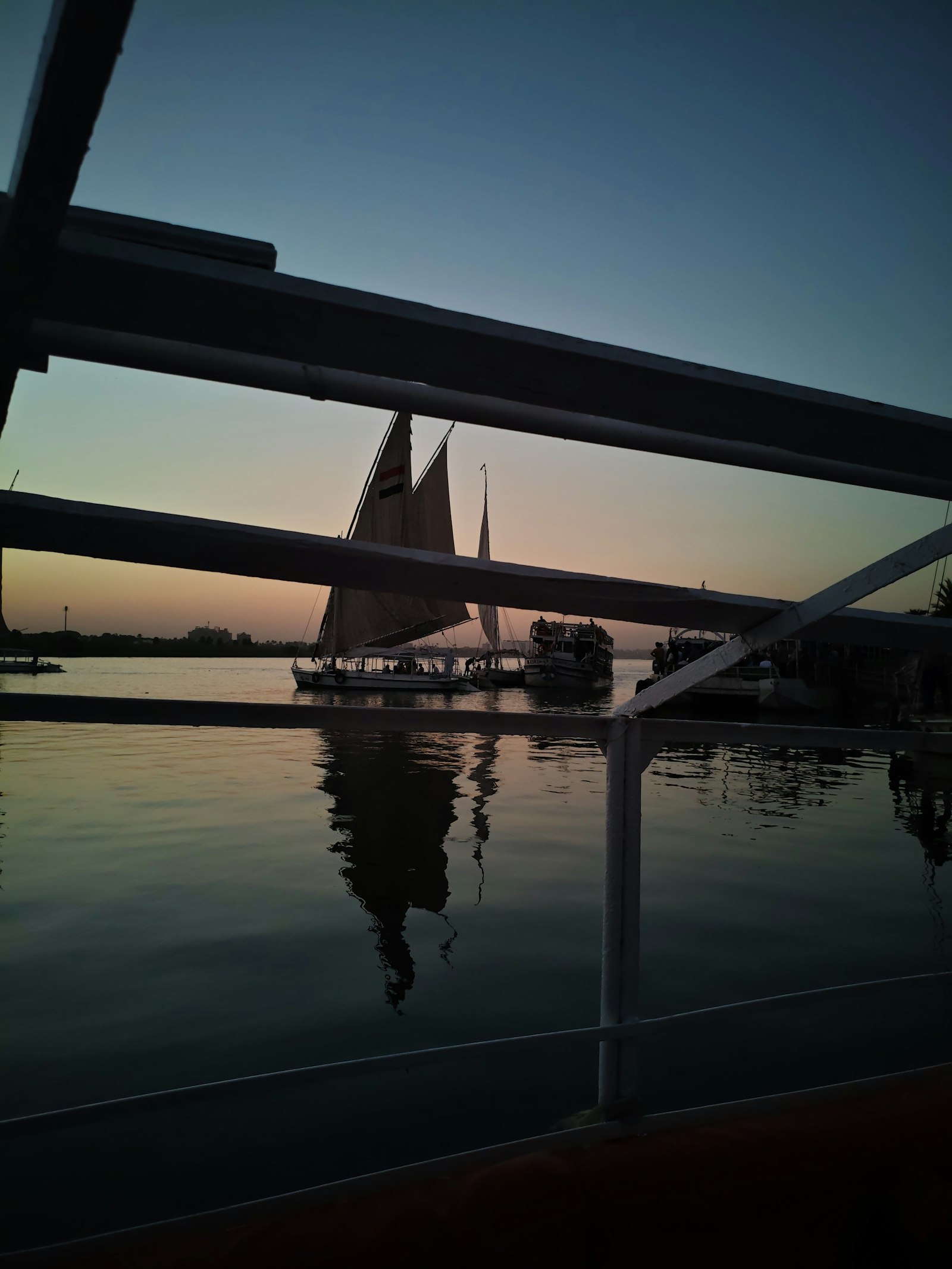
Of all the ways to see ancient Egypt, sailing the Nile between Luxor and Aswan is the most relaxed by far. Rather than driving between sites, you unpack once, and the temples come to you — the boat moves overnight or during the afternoon while you sleep or relax on deck, and you wake up somewhere new.
The classic route
Most multi-day cruises run between Luxor and Aswan (or the reverse), typically over three to five nights, stopping at Edfu, Kom Ombo, and sometimes Esna along the way. This stretch of the Nile has the highest concentration of well-preserved ancient monuments anywhere in Egypt.
What you will see
In Luxor: Karnak Temple, the largest religious complex ever built anywhere in the ancient world, and the Valley of the Kings, burial site of Tutankhamun and dozens of other pharaohs, on the Nile's west bank. Sailing south, Edfu Temple is one of the best-preserved temples in Egypt thanks to being buried in sand for centuries, and Kom Ombo is a unique double temple dedicated to two gods side by side. The journey ends in Aswan, a calmer, more African-feeling city, with the Philae Temple and (for those going further) access to Abu Simbel, Ramesses II's colossal rock temple near the Sudanese border.
Choosing a boat
Standard cruise ships
Multi-deck ships with cabins, a pool, and full board — the most common and comfortable option, well suited to most travellers including families and anyone wanting an easy, all-inclusive pace.
Dahabiyas
Smaller, more traditional sailing boats with a handful of cabins, moving slower and stopping more flexibly. A good choice for travellers who want a quieter, more intimate trip and do not mind a simpler level of comfort.
Feluccas
The traditional wooden sailboats seen throughout Egyptian river scenes — usually used for short sunset sails or a one- or two-night simple camping trip rather than a full multi-day cruise, since they have no cabins.
Best time to sail
November through March offers the most comfortable on-deck temperatures for daytime sailing and sightseeing. Summer cruises are considerably cheaper and the boat's air-conditioned cabins make the heat manageable, but time on deck is best kept to early morning and evening.
What a typical day looks like
Mornings are usually spent ashore at a temple with an Egyptologist guide, back on board for lunch as the boat sails to the next stop, free afternoon time on deck or at the pool, then an evening temple visit or on-board entertainment. It is a genuinely low-effort way to cover a lot of ancient history without the daily packing and driving of a land-only itinerary.
Practical notes
- Book a cabin with a Nile-facing balcony or large window if it is available — the scenery from your room is part of the experience.
- Modest dress is appropriate at temple sites; light layers work well for the temperature swing between the boat and the sites.
- Excursions ashore usually involve some walking on uneven ancient stone — comfortable shoes matter more than they might for a beach cruise.
Few journeys anywhere combine this much history with this little effort. Watching Edfu Temple's pylons appear from the river at dawn is an experience that a road itinerary simply cannot replicate.