

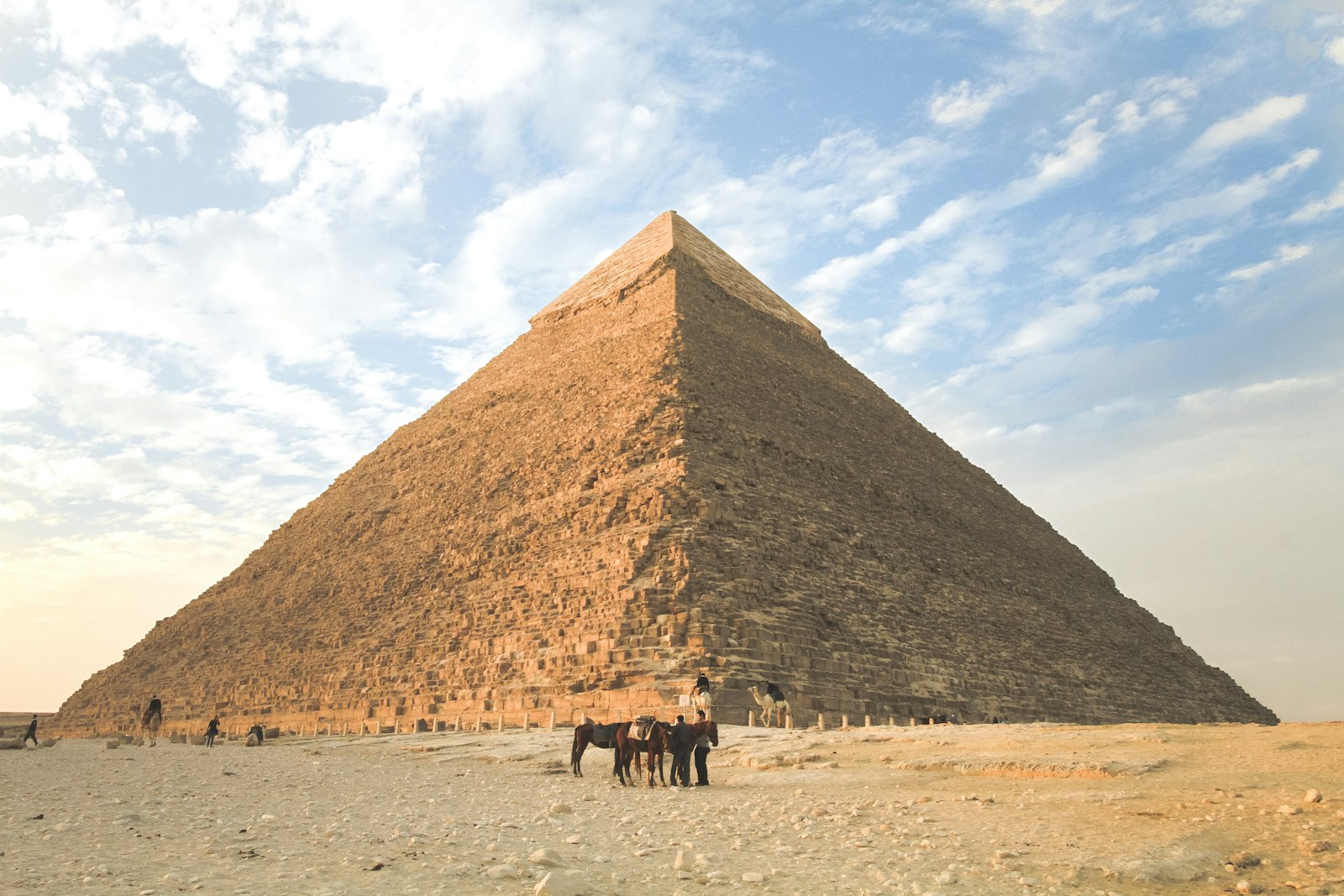
Nothing quite prepares first-time visitors for how close the Pyramids of Giza are to the edge of Cairo itself. Photographs tend to crop out the city, but in reality the Giza plateau sits right at the western edge of Greater Cairo — you can be standing in front of the Great Pyramid twenty minutes after leaving a downtown hotel.
Getting there and buying tickets
The Giza Plateau is easiest to reach by taxi or ride-hailing app from anywhere in Cairo; a private driver for the morning is a popular and inexpensive option if you also want to visit the nearby Solar Boat Museum or Saqqara. General admission tickets are sold at the gate, with separate, additional tickets required to enter the interior of the Great Pyramid or the Solar Boat Museum — decide in advance whether you want to go inside, since interior entry tickets are limited in number each day.
When to go
Arrive at opening time, generally 8am. The site gets progressively busier and hotter through the day, and the golden early light is also the best time for photography. If early mornings are not realistic, the hour or two before closing offers a second, quieter window with dramatic late-afternoon light.
What is actually there
Three main pyramids dominate the plateau: the Great Pyramid of Khufu, the largest and oldest of the three; the Pyramid of Khafre, which still retains some of its original polished limestone casing near the top; and the smaller Pyramid of Menkaure. The Great Sphinx sits just below Khafre's pyramid, facing east. Most visitors budget two to three hours to see the main pyramids, the Sphinx, and the viewpoint on the plateau's edge that gives the classic wide shot of all three pyramids together.
Going inside the Great Pyramid
Entering the Great Pyramid means a steep, low-ceilinged climb up a narrow passage to the King's Chamber — genuinely not comfortable for anyone with claustrophobia, mobility limitations, or back problems, and it is warm and humid inside. The chamber itself is bare (its contents were removed long ago), so many first-time visitors find the pyramid more impressive from the outside; if you are curious about the experience but uncertain about the climb, it is worth deciding based on your own comfort level rather than a sense of obligation.
Dealing with the crowds and vendors
Giza is a working tourist site with persistent vendors offering camel rides, guiding, and souvenirs. A polite, firm "no, thank you" and continuing to walk works reliably. If you do want a camel or horse ride around the plateau, agree the price clearly before you get on, not after.
Practical tips
- Wear comfortable closed shoes — the plateau is sand, gravel, and uneven stone.
- Bring more water than you think you need; there is very little shade.
- A licensed Egyptologist guide is genuinely worth it here — the history is much richer than the bare monuments alone convey.
- Combine with Saqqara (home of the Step Pyramid, the oldest large stone building on Earth) if you have a car or driver for the day.
Overcrowded photographs and a slightly overwhelming vendor scene are the two most common first impressions — but stand at the plateau's edge as the sun comes up over 4,500-year-old stone, and it is easy to understand why Giza has drawn travellers for thousands of years.