
Ask divers to name the Red Sea's most famous wreck and many will say the SS Thistlegorm. It is a historic cargo ship, still full of its wartime load, and it rewards divers with a vivid sense of the past. It is also a demanding trip with real logistics, so this guide explains what the site is, who it suits and how a visit from Hurghada usually works.
The history of the Thistlegorm
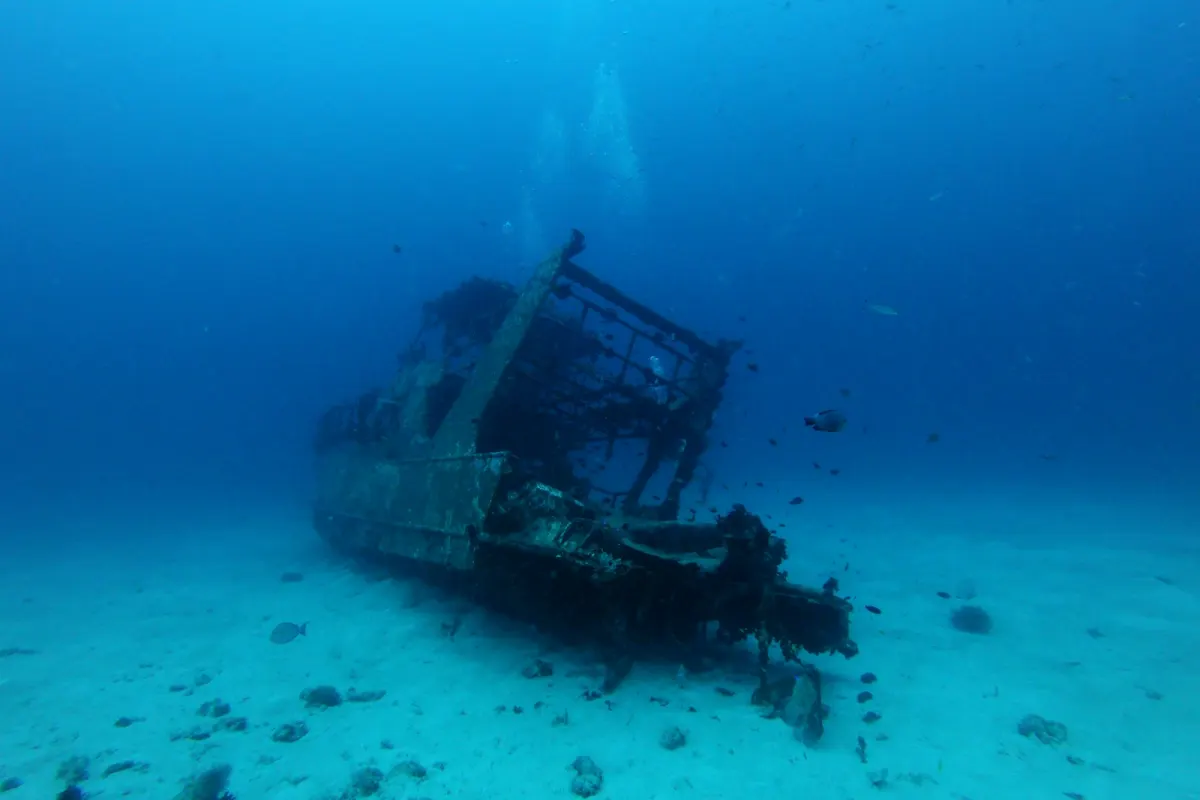
The Thistlegorm was a British merchant ship, built in the late 1930s and carrying supplies for Allied forces during the Second World War. In October 1941 she was anchored in the northern Red Sea, waiting to pass through the Suez area, when she was hit by German aircraft and sank. The wreck was later found by Jacques Cousteau's team, and then became widely known to recreational divers after the site was rediscovered and shared several decades later. Today it is protected in the sense that visitors are expected to treat it as a historic site and leave everything where it is.
What you see on the dive
The appeal of the Thistlegorm is the cargo. Depending on the visibility and the part of the wreck you explore, you may see motorbikes, trucks, armoured vehicles, ammunition and other supplies stacked in the holds, along with the ship's structure, a deck gun and the remains of rail wagons. Coral and fish life have colonised the steel, and schools of fish often cloud around the hull. The wreck lies on a sandy bottom at depths of roughly 16 to 30 metres, with the shallower parts around the upper decks and the deeper parts near the seabed. Many groups do two dives, one to take in the outside and one to look into the holds.

Currents and conditions
The wreck is in open water, where conditions can change quickly. Currents can be noticeable, and the surface can be choppy. Mooring and the descent line become important, and dive guides usually give a detailed briefing. Visibility is often good but varies from day to day. These factors are why most operators treat the Thistlegorm as a trip for experienced divers rather than first-timers.
Who the dive suits
Requirements differ between operators, but the Thistlegorm is generally recommended for divers with at least an Advanced Open Water certificate or equivalent, plus a decent number of logged dives and good buoyancy control. Divers who are rusty, who have only done a handful of dives, or who are uncomfortable in currents may be asked to build experience elsewhere first. If you are not sure whether you qualify, ask the centre what they require and be honest about your recent diving; a good operator would much rather suggest a different site than put you out of your depth. Our guide to dive sites in Hurghada by level is a useful place to start, and the Open Water course guide explains the first steps in training.
How trips from Hurghada work
The Thistlegorm is not on Hurghada's doorstep. It lies in the northern Red Sea, in the Gulf of Suez area near the southern tip of the Sinai, a long way from most Hurghada dive sites. People usually reach it in one of a few ways:
- A very long day trip combining travel by road and a boat crossing. This makes for an early start and a late return.
- A liveaboard trip, in which you sleep on the boat and often combine the wreck with other northern sites over several days.
- A stay near Sharm el Sheikh, where many day boats leave for the wreck. If the Thistlegorm is the main goal of your holiday, this is worth considering. Our Sharm el Sheikh travel guide may help.
Routes, timings and availability change with the season, the weather and the operator, so treat all of this as general information and confirm details before you book. Allow for the fact that a trip can be altered or cancelled at short notice if the sea is rough.
Other wrecks near Hurghada
If a full Thistlegorm trip is not practical, there are other wrecks in the northern Red Sea. The reefs of Abu Nuhas, in the Strait of Gubal, are sometimes called the ship graveyard because several vessels have gone down on them over the years. Some boats from Hurghada visit this area on longer outings, though it is more often visited by liveaboards. The sites tend to suit divers with some experience, and the wrecks are generally best explored with a guide who knows them.
Further south, the Salem Express is a ferry that sank in 1991 with heavy loss of life. It is best thought of as a memorial. Dive it, if at all, with respect: do not enter the wreck, do not touch or remove anything, and follow your guide's advice. It is covered more fully in our Safaga diving guide.
Respecting wrecks
- Take nothing. Souvenirs from wrecks are illegal and disrespectful.
- Watch your fins and keep your distance from the structure and the cargo; silt and damage cannot be undone.
- Do not penetrate the wreck unless you have the right training, equipment and a guide, and the dive plan allows it.
- Follow the briefing about mooring lines, exit points and your turn pressure.
Practical tips
- Check the operator's current requirements for certification and number of dives before you commit.
- Consider taking an Advanced course first if the Thistlegorm is the highlight of your trip.
- Bring any motion-sickness remedy you already know works for you if you are likely to feel the boat motion.
- Check that your insurance covers diving at your certified depth. See our diving insurance article for general pointers, and our travel health page. Egypt X Ltd is not an insurance company and not a healthcare provider; this is general information, not medical or insurance advice.
- Remember flying restrictions after diving; ask your centre for the current guidance.
Planning a wreck trip
Egypt X Diving runs diving and snorkelling trips in Hurghada, and you can ask about what is possible and what experience is needed via our contact page. For a wider view of the region, see our Red Sea diving guide.
Frequently asked questions
Can I dive the Thistlegorm from Hurghada?
Yes, but it is not close. The wreck lies in the northern Red Sea, a long way from most Hurghada dive sites. Visits are usually made as a very long day trip combining road and boat travel, or on a liveaboard. Availability and timings vary with weather and operator, so confirm details before booking.
What certification do I need to dive the Thistlegorm?
Requirements differ, but most operators recommend Advanced Open Water or equivalent plus a reasonable number of logged dives and good buoyancy control. Currents and depth can be significant. Ask the dive centre what it requires, be honest about your recent experience, and consider an Advanced course first if the wreck is your main goal.
How deep is the Thistlegorm wreck?
The wreck lies at roughly 16 to 30 metres, with the upper decks shallower and the seabed deeper. Many groups do two dives, one outside the ship and one looking into the holds. Exact depths and routes depend on the dive plan and conditions on the day, so follow your guide's briefing.
What can you see on the Thistlegorm?
Divers often see motorbikes, trucks, armoured vehicles, ammunition and other wartime supplies in the holds, along with the ship's structure and a deck gun. Corals and fish have colonised the steel. What you actually see depends on visibility and where your guide takes you. Never touch or remove anything.
Is the Thistlegorm dive suitable for beginners?
Generally no. The wreck is in open water, where currents and chop can change quickly, and it is usually recommended for divers with more experience. Beginners are better served by sheltered reefs first. If you want to work towards the wreck, ask a school about Advanced training and building logged dives.
Are there other wrecks I can dive near Hurghada?
Yes. The reefs of Abu Nuhas in the northern Red Sea hold several wrecks and are mostly visited on longer or liveaboard trips. The Salem Express, further south, is a memorial to a ferry lost in 1991, so treat it with respect and never enter it. Ask your centre what is currently offered.
Ready to dive the Red Sea yourself?
Book PADI-certified dive trips, courses and snorkelling excursions in Hurghada and Marsa Alam directly with our sister brand, Egypt X Diving.
Explore trips on egyptxdiving.com →