

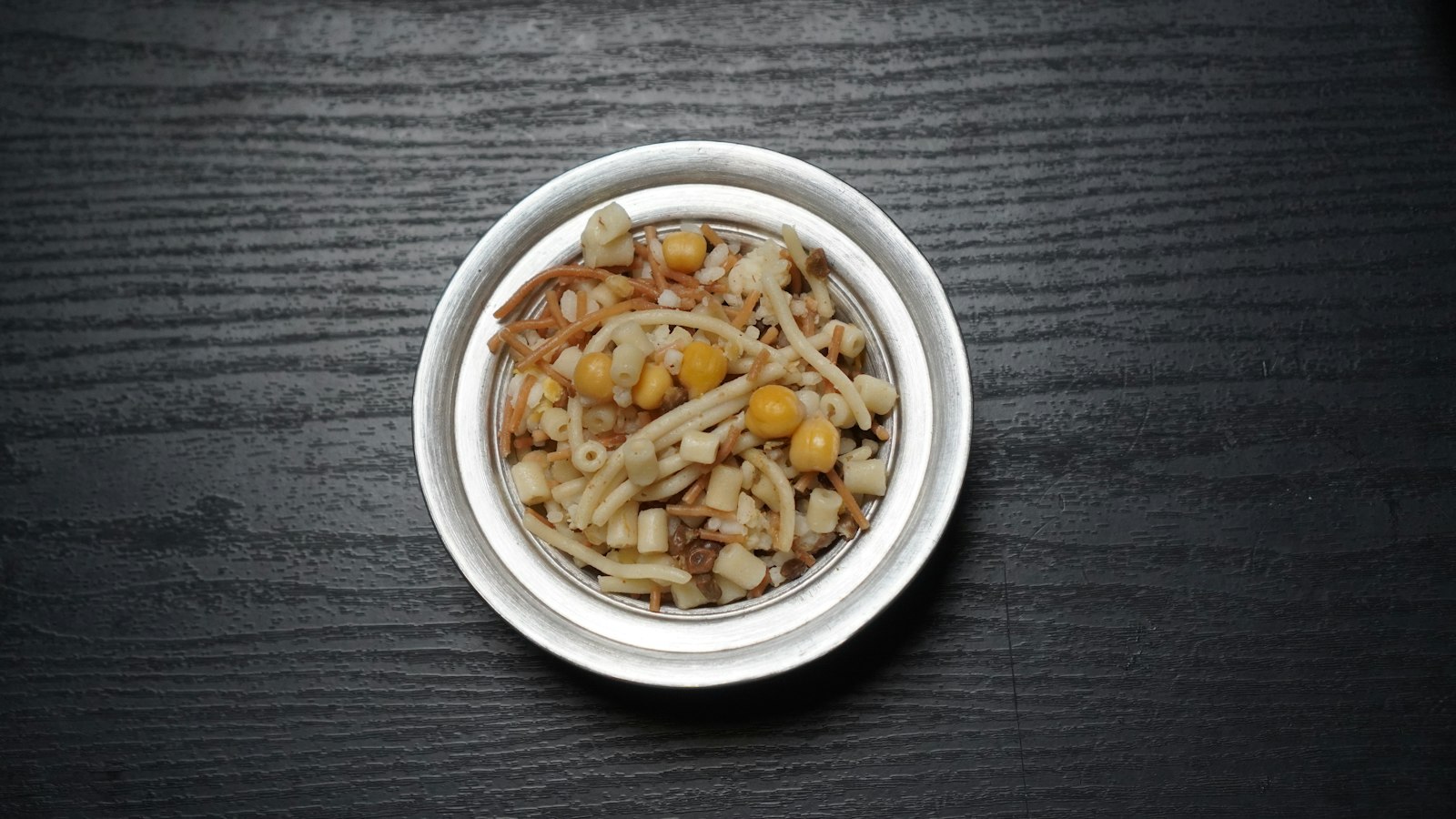
Egyptian food tends to sit quietly in the background of most trip planning, overshadowed by temples, the Nile, and the Red Sea. That's a shame, because it's genuinely one of the most approachable and satisfying cuisines in the region — built on lentils, bread, rice, and slow-cooked vegetables, with seafood along the coast and a handful of dishes you won't easily find outside the country.
The everyday staples
Three dishes turn up almost everywhere and are worth learning by name before you land. Koshari is the closest thing Egypt has to a national dish — a carb-heavy bowl of rice, lentils, chickpeas, and macaroni topped with crispy fried onions and a tangy tomato-vinegar sauce, sold from dedicated koshari shops in every city. Ful medames, slow-cooked fava beans mashed with olive oil, lemon, and cumin, is the standard breakfast, usually scooped up with fresh baladi bread. Ta'ameya, Egypt's version of falafel made from fava beans rather than chickpeas, is sold fresh from street stalls and makes a reliable, inexpensive lunch anywhere in the country.
Street food worth seeking out
Beyond the staples, look out for shawarma stands doing brisk business in the evening, grilled kofta and kebab at simple grill houses, and hawawshi — spiced minced meat baked inside flatbread, similar in spirit to a stuffed pita. Street carts selling roasted sweet potatoes and corn appear in the cooler months, and freshly squeezed sugarcane juice (asab) is a common, inexpensive way to cool down in summer.
Regional specialties
Alexandria and the Mediterranean coast lean heavily on seafood — grilled or fried whole fish, calamari, and shrimp sold by weight at simple seafront restaurants, usually the best value seafood you'll find in the country. In Upper Egypt and around Aswan, Nubian cuisine adds its own character: dishes built around okra, dried tomatoes, and different spice blends than you'll find further north, often served in the colourful Nubian villages along the Nile. Along the Red Sea coast, hotel and resort restaurants tend to serve more international menus, so if you want the dishes above, city and town restaurants away from the resort strip are usually a better bet.
Drinks and sweets
Hibiscus tea (karkade), served both hot and cold, is worth trying and widely available. Egyptian mint tea is strong and heavily sweetened by default — ask for it "sukar khafif" (light sugar) if you'd prefer less. For dessert, kunafa and basbousa — a shredded pastry and a semolina cake, both soaked in sugar syrup — are sold by weight at dedicated sweet shops and make a good afternoon stop.
Practical tips
- Bottled or filtered water is the safe default for drinking; ice in reputable restaurants and hotels is generally fine, but it's worth being more cautious at informal street stalls.
- Vegetarian travelers are well served — koshari, ful, ta'ameya, and most vegetable dishes are naturally meat-free, though it's worth confirming stock and cooking fat if you're strictly vegan.
- Restaurants popular with locals rather than tourists are usually both cheaper and better; a busy, simple-looking spot is a good sign.
- During Ramadan, many local restaurants keep different hours and some close during daylight fasting hours — check ahead if you're travelling during that period.
Skipping the resort buffet for a plate of koshari from a busy local shop, or a plain grilled fish dinner on the Alexandria seafront, is one of the simplest ways to get a genuine feel for Egypt beyond its monuments.